
Imagine this scenario: You have spent all week pouring your heart and soul into a masterpiece article. You meticulously optimized the focus keywords, created crisp, high-converting subheaders, structured an incredible layout, and double-checked your facts. You hit the “Publish” button inside WordPress with a huge grin on your face, ready for the traffic to flood in.
Three days pass. Then a week. You open a private browser window, type site:[yourwebsite.com/your-post-slug](https://yourwebsite.com/your-post-slug), and hit enter.
Your heart sinks. The screen is completely blank except for a cold, frustrating automated message from search engine security: “Did you mean to search for…? Your search did not match any documents.” You jump into Google Search Console, look up the URL inspection tool, and there it is in plain text: “Discovered – currently not indexed” or “Crawled – currently not indexed.”
Naturally, panic sets in. Your content is completely invisible to the world. You start wondering, “Is my site secretly shadowbanned? Did I trigger a manual penalty by using an AI copywriting tool? Do I have a massive security glitch in my hosting server code that is locking out search bots?”
First of all, take a deep breath. At Anus Khan Insights, we want to reassure you that this indexing bottleneck is the most common roadblock encountered by new bloggers and digital publishers. It rarely means you are banned, and it doesn’t mean your article is low quality. It simply means there is a technical wall, an architectural data-loop error, or a crawl budget restriction that is keeping Googlebot from committing your words to its massive global database.
In this comprehensive, step-by-step masterclass, we will deconstruct the exact mechanics of search engine discovery. We will look at why new URLs get stuck in indexing limbo and walk you through the precise framework to fix it now so your hard work finally receives the visibility it deserves!
Let’s fix your search visibility parameters together!
The Golden Rule: The Library Catalog Analogy
Before looking into your backend dashboard adjustments, you must understand how search engine crawlers process data. Many creators treat publishing a post like handing a flyer directly to a reader. In reality, search engines operate as an automated, multi-tiered library database.
To understand this effortlessly, let’s bring back our favorite Library Analogy.
Think of the internet as an infinitely growing city library containing trillions of books.
Discovery is when the library delivery truck pulls up to your building to pick up your new book.
Crawling is when the head librarian sits down, opens your book, and flips through the pages to read your chapters.
Indexing is when they officially assign a specific shelf location code to your book, register it in the master computer database, and allow the general public to check it out.
If you don’t build a clear road for the delivery truck, your book stays sitting in a box in your warehouse. Your primary goal as a professional digital content creator is to remove every technical barricade, making it completely effortless for the automated system to read, approve, and register your pages.
5 Steps to Force Google to Crawl and Index Your Blog Posts
If your fresh articles are stuck in search engine limbo, systematically run your web platform through this five-tiered diagnostic checklist to clear the blockage:
1. Demolish the Passive “Discourage Search Engines” Barrier
The single most common reason why a new blog or staging site fails to show up on search engines is a simple, forgotten toggle switch hidden deep inside your configuration panel.
The Check: If you are running on WordPress, navigate to Settings > Reading. Scroll down to the very bottom to find the option labeled “Search Engine Visibility: Discourage search engines from indexing this site.”
The Fix: If that box has a checkmark next to it, your site is actively broadcasting a code block that tells search engines to go away. Uncheck that block immediately, hit save, and your digital doors will open to world traffic.
2. Verify Your Robots.txt File Commands
Your site contains a tiny, underlying plain-text file called robots.txt that sits right at the root of your domain name address. This file acts as a traffic director for automated search engine robots.
The Threat: If your file accidentally contains a line of code that reads
Disallow: /, you are sending a structural command that bars crawlers from entering any part of your platform.The Solution: Use an SEO management plugin to inspect your file. Ensure your primary content folders (like
/wp-content/uploads/) are completely open for exploration, and make sure your file explicitly points straight to your XML sitemap URL.
3. Clear Out Internal Redirection and Canonical Loops
If your platform’s underlying code tells search engines that your new page isn’t the absolute final destination for the content, the crawler will immediately abandon the link to save its processing power.
The Strategy: Open your layout properties and look at your canonical tag variables. Ensure your target URL points directly to itself as the true master source. Avoid messy multi-step URL internal redirects, clean up your broken links, and verify that your server is serving a clean status response code to inbound crawling requests.
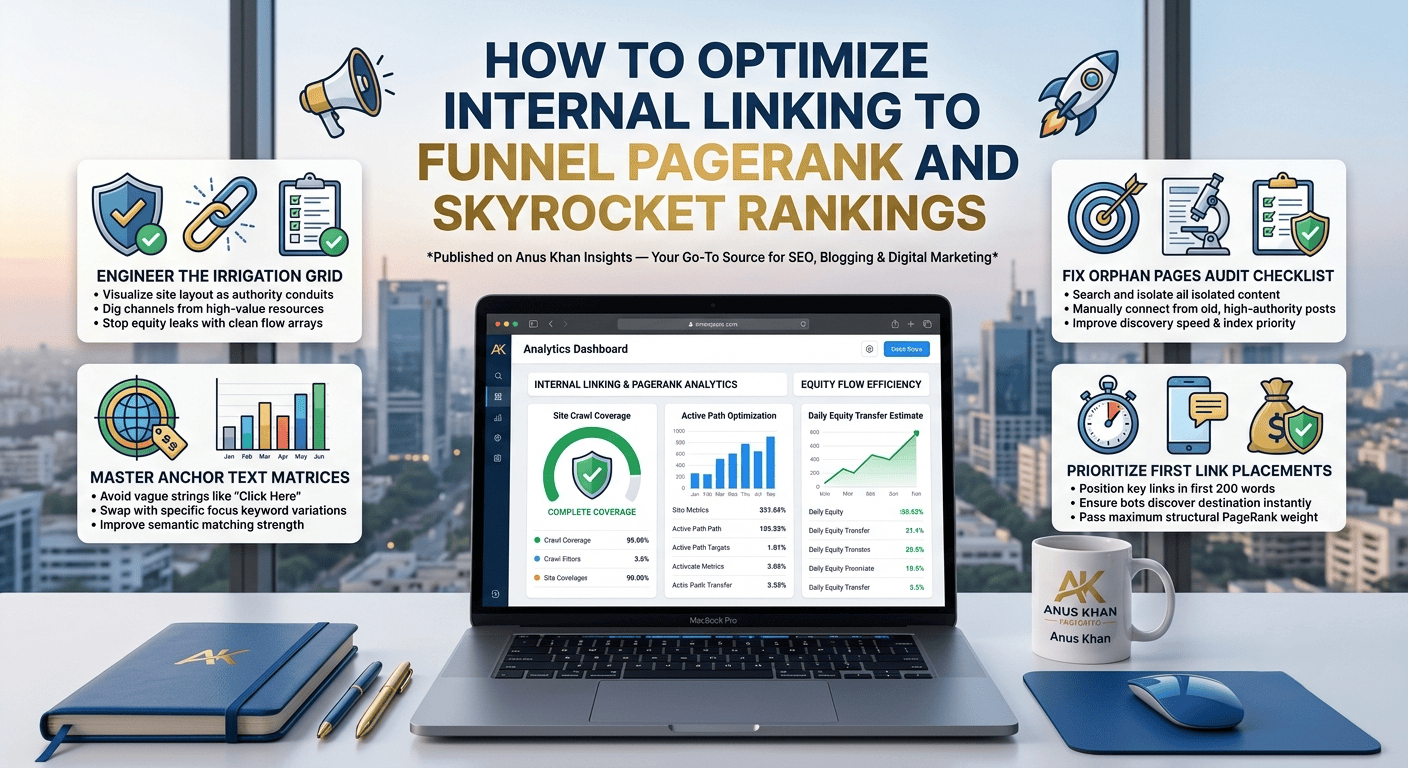
4. Build a Structural Internal Linking Web
Search engines find new content by crawling existing, trusted pages that they have already fully indexed. If you publish a fresh article but fail to link to it from your high-traffic older posts, your new page becomes an isolated “Orphan Page” that is highly difficult for automated bots to discover.
The Action Step: The absolute second you publish a new blog post, find three older, fully indexed articles on your platform that share a similar contextual topic. Edit those older posts, write relevant anchor text naturally, and link them straight to your new URL. This drops an immediate breadcrumb trail that guides automated search crawlers straight to your new post.
5. Deploy the Instant Indexing API Protocol
Waiting passively for search engine trucks to find your sitemap file on their own can take weeks for a brand-new blog. To accelerate this timeline completely, pass your data directly to the server infrastructure using automated indexing protocols.
The Pro Setup: Set up a free Google Developers project account, configure an automated service account key, and integrate a safe Instant Indexing plugin on your blogging dashboard. This sets up a direct server-to-server connection. The moment you hit publish on an article, the tool automatically sends an instant ping straight to the search infrastructure, forcing a bot to crawl your page within minutes rather than weeks.
Technical Indexing Troubleshooting Quick-Reference Table
| Search Console Error Status | Real-World Technical Meaning | How to Fix It Fast Without Code |
| “Discovered – currently not indexed” | Google knows your post exists, but its system is overloaded or feels your site lacks enough crawl priority. | Build internal links to the post from your top-performing pages; improve your overall site authority with clean backlinks. |
| “Crawled – currently not indexed” | Googlebot fully read your article but decided it doesn’t provide enough distinct value to display to readers. | Rewrite your introduction; eliminate fluff, add original data elements, and ensure your layout satisfies real user search intent. |
| “Excluded by ‘noindex’ tag” | Your page headers or plugin meta configuration blocks explicitly contain code telling bots not to store the page. | Open your SEO plugin panel for that specific post; ensure the indexing checkbox is set to “index” instead of “noindex”. |
| “Sitemap could not be read” | Your XML sitemap path is broken, unreadable, or formatted in a layout that throws off server reads. | Delete your old sitemap link in Search Console, clear your caching layer, and resubmit a clean, fresh sitemap URL string. |
Final Thoughts
At the end of the day, making sure your new blog indexes on search engines isn’t about hoping for good luck—it’s about providing an open, highly organized digital map for automated systems to follow. When you eliminate accidental code blocks, structure a tight network of helpful internal contextual links, and utilize fast server-to-server indexing tools, your visibility delays disappear entirely.
Let’s do a quick recap of our diagnostic search action plan:
Always check your platform reading parameters to ensure you aren’t accidentally discouraging search bots.
Audit your underlying plain-text instruction files to clean out destructive disallow strings.
Keep your structural canonical tags aligned directly with your primary destination URLs.
Eliminate isolated orphan pages by weaving strong internal links from your older, trusted content.
Use direct API protocols to push your fresh posts directly to search engine servers for immediate review.
At Anus Khan Insights, we are dedicated to simplifying the technical side of web growth. Clear away your crawling bottlenecks systematically, optimize your structural code frameworks cleanly, and watch your blog indexing, search impressions, and organic traffic scale!
Written by Muhammad Anus Khan — Digital Strategist, SEO Expert & Founder of Anus Khan Insights
Category: Technical SEO & Indexing Solutions | Reading Time: 8 Minutes | Level: Intermediate
Next Read: How to Master Advanced XML Sitemap Optimization for Massive News Sites — Coming Tomorrow on Anus Khan Insights!

Leave a Reply