Introduction
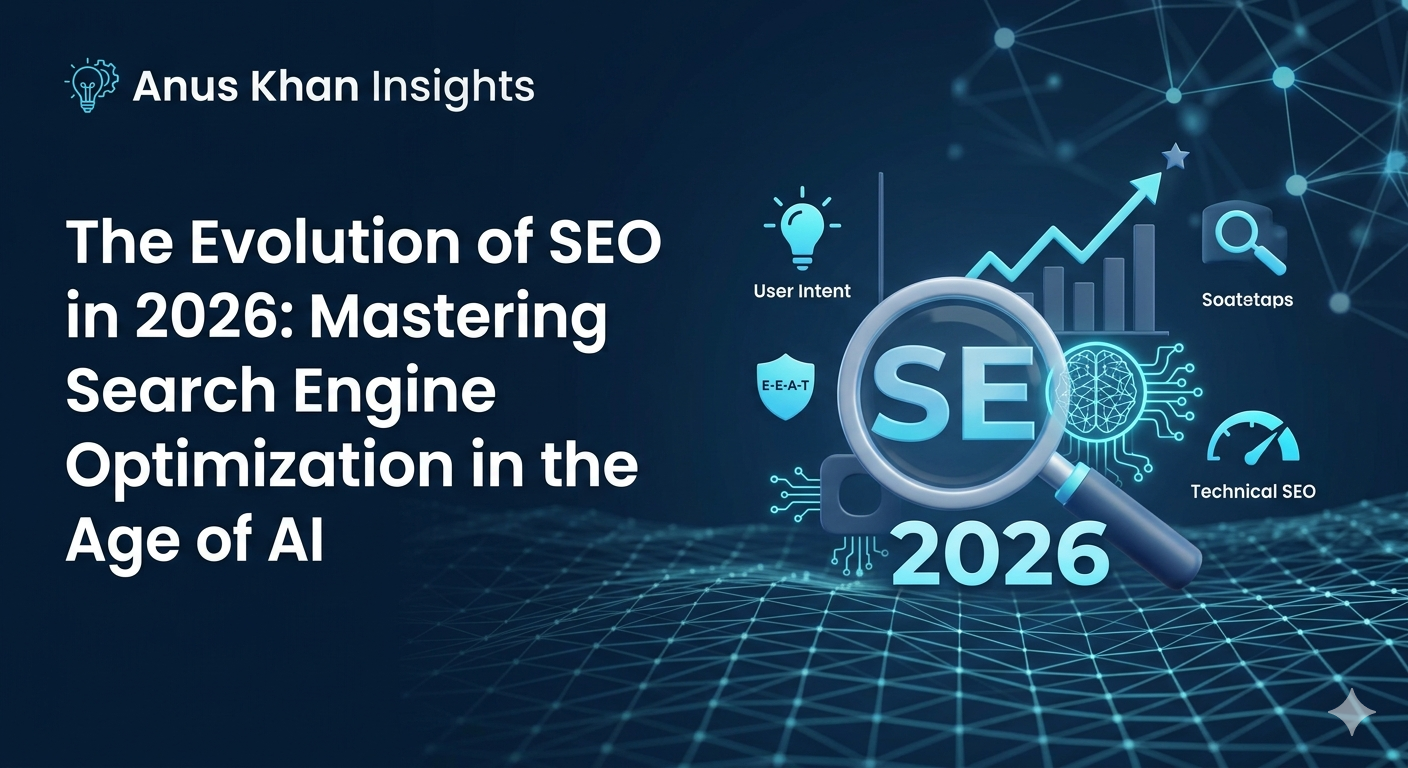
The digital landscape has changed. If you are still using 2020 SEO tactics in 2026, you are invisible. Search engines like Google have moved beyond simple keyword matching to Semantic Understanding. Today, Anus Khan Insights breaks down exactly what you need to do to dominate search results this year.
1. The Shift to User Intent
In 2026, Google doesn’t just look for words; it looks for answers. You must identify whether your reader wants to learn something (Informational), buy something (Transactional), or just find a specific site (Navigational).
Action Tip: Before writing, search your keyword and see what the top 3 results are providing. That is the “Intent” you must follow.
2. Experience, Expertise, Authoritativeness, and Trust (E-E-A-T)
Google prioritizes content written by people with real-world experience. This is why “Anus Khan Insights” focuses on data-driven results.
Pro Tip: Add a short bio at the end of your posts to show Google you are a real expert in the Digital Marketing and Blogging niche.
3. Technical SEO: Speed is No Longer Optional
With 5G and high-speed fiber becoming the standard, users expect instant loading.
Core Web Vitals: Check your site’s LCP (Largest Contentful Paint). If it’s more than 2 seconds, your rankings will drop.
Mobile First: Ensure your site looks flawless on mobile devices.
4. Optimizing for AI Search (SGE)
Artificial Intelligence now summarizes answers at the top of the search page. To appear in these AI snapshots, your content must be:
Structured with clear H3 Sub-headings.
Answer questions directly in the first paragraph.
Use bullet points for readability.
5. Semantic SEO: The Death of Simple Keywords
Keyword stuffing is a thing of the past. In 2026, Google uses Natural Language Processing (NLP) to understand the context. For example, if you write about “SEO,” Google expects you to mention “Backlinks,” “Search Console,” and “Algorithm Updates.”
Strategy: Use LSI (Latent Semantic Indexing) keywords. If you are talking about SEO, don’t just repeat the word; use related terms like “organic reach,” “SERP visibility,” and “click-through rate.”
6. Voice Search and Conversational Marketing
With more people using voice assistants, queries are becoming longer and more conversational. People don’t type “Best SEO 2026” anymore; they ask, “How do I rank my blog on Google in 2026?”
Tip: Create an FAQ Section at the end of every blog post. This helps you rank for “People Also Ask” snippets.
7. Video SEO: The Power of Visual Search
Articles with embedded videos have a 50% higher chance of ranking on the first page. Even if it’s a short 1-minute summary of your blog, add it.
Alt Text for Videos: Just like images, ensure your video metadata is optimized with your target keywords.
8. The Importance of User Experience (UX)
Google’s RankBrain monitors how users interact with your site.
Dwell Time: If a user spends 5 minutes reading your long-form content, Google thinks, “This is great!”
Bounce Rate: If they leave in 5 seconds, your ranking will drop.
Solution: Use short paragraphs, bold text for key points, and plenty of white space.
Conclusion
SEO in 2026 is about building a brand, not just a website. By focusing on high-quality content and technical perfection, you can ensure your blog stays ahead of the competition.

Leave a Reply