
Have you ever wondered how search engines suddenly got so smart at understanding what we actually mean? The days of mindlessly stuffing keywords into a page to rank are officially over. If you want to scale your organic growth truly, you need to learn how to optimize enterprise blogs for semantic search performance. Today’s AI-driven algorithms don’t just look at isolated strings of text anymore; they map the complex relationships between real-world concepts, entities, and actual human intentions. At Anus Khan Insights, we believe that when your content provides unique value to readers while remaining technically crystal-clear to search engines, your visibility becomes unstoppable. As a platform Owner, mastering this strategic shift is the ultimate way to build a future-proof traffic engine. Let’s dive into how this works in a friendly, no-nonsense way.
1. Moving Beyond Keywords: What is Entity-Based SEO?
Let’s keep it simple. Search engines now view the entire internet through the lens of “Entities”—which are just uniquely identifiable people, places, things, or concepts. Instead of counting how many times you typed a specific phrase, algorithms look to see if you have covered all the connected ideas that naturally belong to that topic.
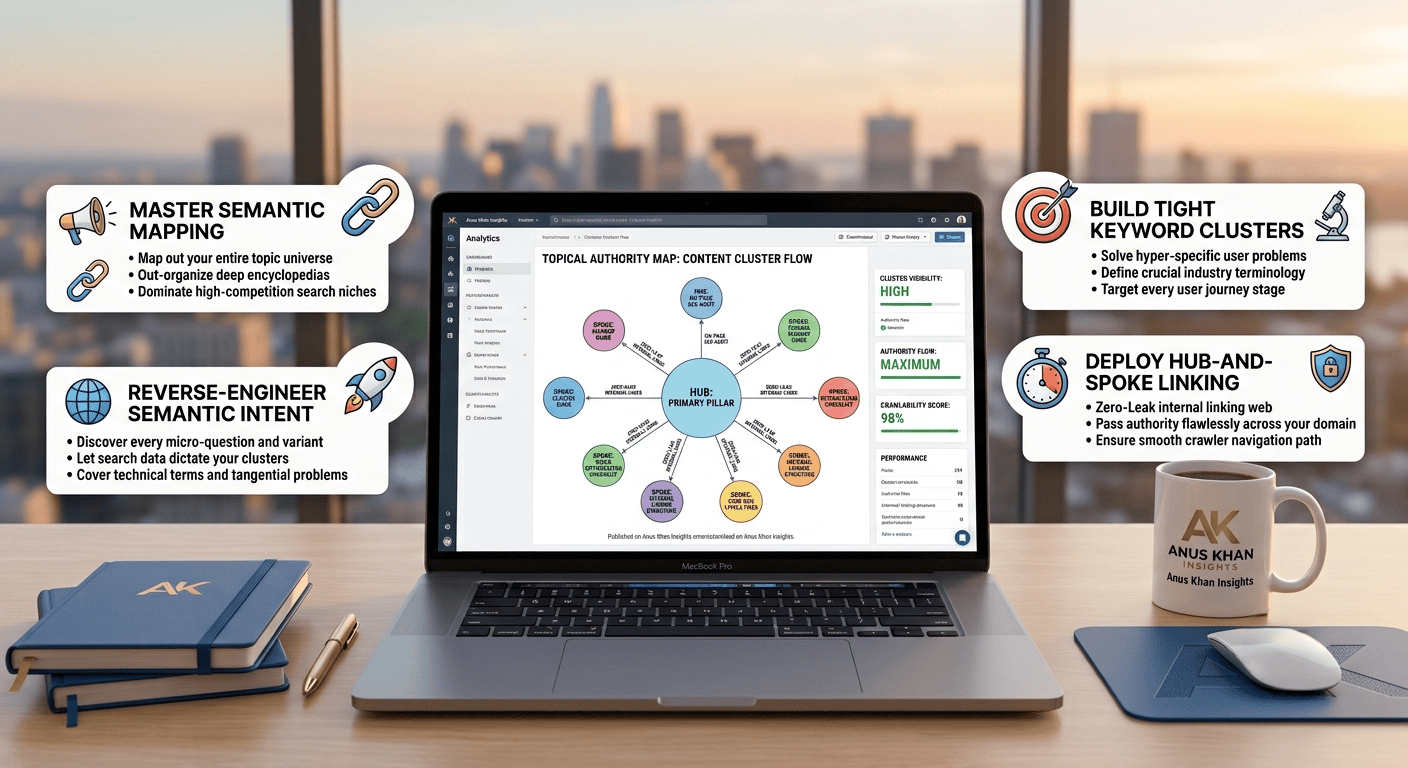
To win at this game, you need to build comprehensive topical maps instead of writing isolated blog posts. When you construct highly organized content hubs that answer every logical follow-up question a reader might have, search engines instantly recognize your domain as an absolute authority on the subject.
2. Schema Architecture: Speaking the Machine’s Language
While we write engaging, friendly prose for our human readers, we still need to give search engine bots a direct roadmap in a language they prefer: structured data code.
Nested JSON-LD Scripts: Don’t just rely on basic, automated plugins. Use a customized, nested JSON-LD schema to explicitly link your article’s core concepts back to your brand identity and author profile.
Leveraging ‘About’ and ‘Mentions’ Arrays: Within your schema code, point directly to established Wikidata or Wikipedia URLs for the primary entities you discuss. This eliminates any algorithmic guesswork, letting crawlers index your contextual relevance in seconds.
3. Intent Clustering: Aligning with the Reader’s Mindset
People search with different moods and goals. Sometimes they want quick information, sometimes they are investigating options, and other times they are ready to make a transactional move. Trying to force all of these intents into a single page usually causes readers to bounce right back to the search results.
Instead, cluster your content logically. Create a master pillar page that outlines the big picture, and then link out to specific, hyper-targeted sub-articles that handle individual user questions step-by-step. This structural discipline keeps readers hooked and stops your own pages from competing against each other in the SERPs.
4. Semantic Internal Linking: Building a Smart Web
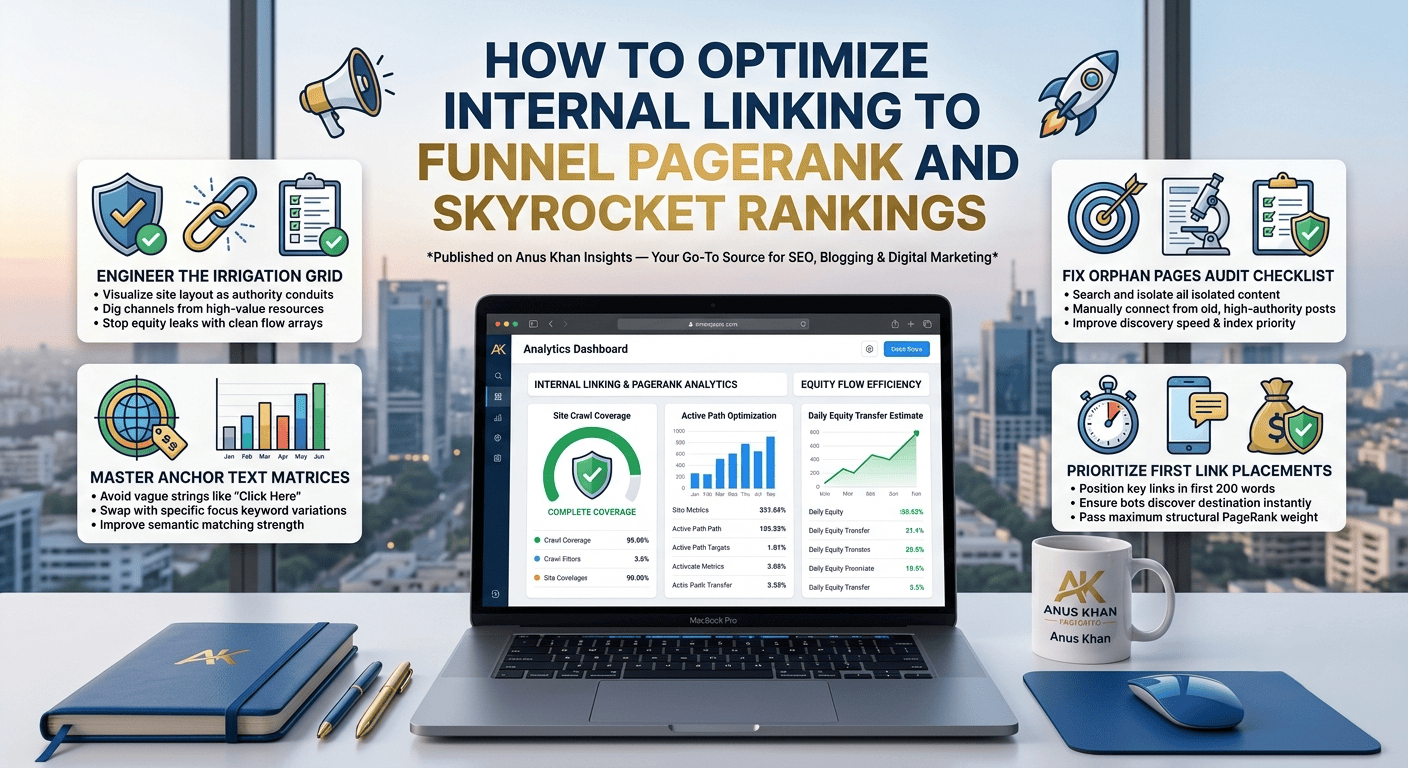
Internal linking isn’t just about throwing links across your site; it’s about passing topical authority where it matters most. Avoid using lazy, generic anchor text like “click here” or “read more.”
Always opt for descriptive, contextually rich anchor phrases. Make sure the surrounding paragraph contains terms naturally related to the target page. This gives search crawlers a clear preview of the value waiting on the other side of the link before they even cross it.
Conclusion
SEO is no longer a boring technical checklist; it’s about building a beautiful, reliable bridge between human curiosity and machine understanding. When you deliberately optimize enterprise blogs for semantic search performance, you transform a standard blog into an irreplaceable digital ecosystem. By anchoring your strategies around entities, nested graphs, and structured intent clustering here at Anus Khan Insights, you build an unshakeable competitive moat. Implement these steps, keep your content deeply human, and watch your organic authority soar.

Leave a Reply