
Traditional search engine optimization relies heavily on matching exact string variations across a webpage. However, modern search algorithms have evolved from analyzing simple text strings to understanding real-world concepts, connections, and semantic relationships. To maintain high organic visibility, your content asset strategy must transition from basic keyword targeting to comprehensive topical authority building. At Anus Khan Insights, we focus on future-proof technical architectures. As a digital platform Owner, mastering entity-driven structures is your single most effective path to securing permanent real estate inside search engine Knowledge Graphs.
1. Understanding Entity-Based SEO and Knowledge Graph Integration
Entity-based seo and knowledge graph integration is the advanced optimization practice of structuring web content around distinct, clear, real-world concepts (entities) and defining their exact semantic relationships using structured data to help search engine machines instantly grasp your topical authority.
An entity can be a person, a place, an organization, or an abstract concept that is clearly defined and uniquely identifiable. When you optimize your architecture for entities rather than isolated keywords, you provide search engine algorithms with a clear map of how your content connects to established industry nodes. This deep semantic clarity ensures your assets are accurately indexed, highly valued, and prioritized for conversational, semantic, and AI-driven search queries.
2. Mapping Topical Node Hierarchies and Semantic Relations
Before writing an article for Anus Khan Insights, you must structure your content layout based on semantic connections rather than just looking at individual keyword search volumes.
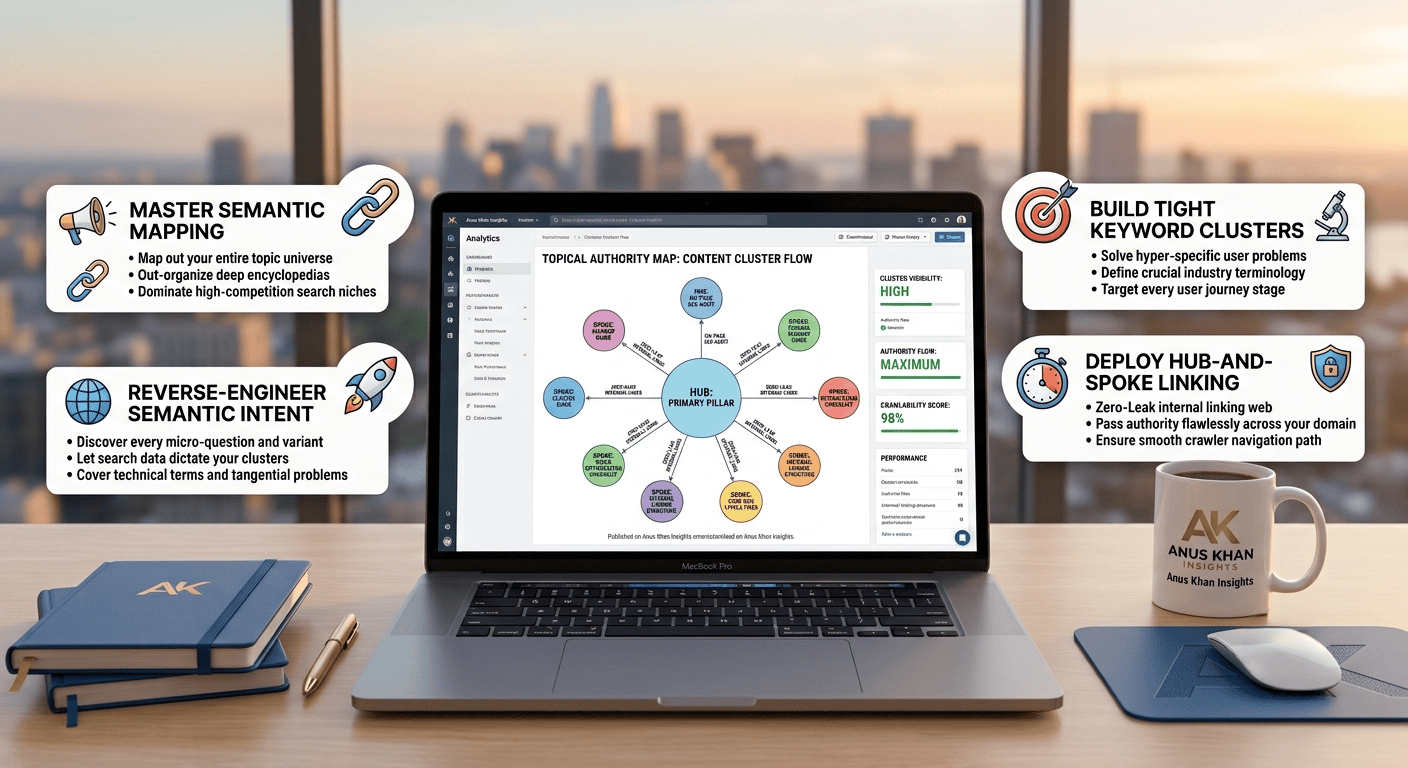
Identifying Core Entities: Identify the primary entity of your topic,c along with all its related sub-entities. For example, if your primary entity is “Search Engine Optimization,” your related sub-entities will include “Crawl Budget,” “Semantic HTML,” and “Schema Markup.”
Structuring Information Nodes: Organize these related concepts logically using clear contextual sections. Instead of writing disconnected paragraphs, write explicit sentences that define the exact relationship between entities, allowing search crawlers to seamlessly build a semantic map of your industry expertise.
3. Implementing Advanced Schema Markup and JSON-LD Configurations
To clearly declare your content’s entities to search engine scrapers, you must use precise, advanced structured data code embedded natively within your page headers.
Leveraging About and Mentions Schema: Do not settle for basic Article schema. Use specialized JSON-LD configurations that utilize
aboutandmentionsarrays to explicitly link your content nodes directly to established external knowledge bases, such as Wikipedia or Wikidata entries.Establishing SameAs Relations: Utilize the
sameAsProperty within your Organization or Author schema block to connect your brand name to verified social profiles and official digital footprints on Anus Khan Insights. This explicit data linking removes all algorithm ambiguity, helping search bots instantly verify your platform’s true identity and authority.
4. Optimizing Content Depth for Semantic Search Vectors
Modern search algorithms use advanced vector spaces to evaluate how completely a webpage answers a user’s intent. Your copywriting must reflect this deep contextual structure.
Answering Intent-Driven Questions: Identify the exact natural language questions users ask regarding your target entity. Embed these specific questions directly into your
###Subheaders and provide clear, direct, and factual answers immediately in the following text block.Maintaining High Entity Density: Natural entity density means including industry-specific terminology, related historical concepts, and precise technical tools naturally throughout your content body. This complete contextual mapping proves to algorithms that your asset is an exhaustive authority resource rather than a surface-level summary.
5. Auditing Entity Footprints and Tracking SERP Features
Once your entity-driven structure is live, you must continuously monitor how search engine indexing machines interpret your brand’s overall semantic footprint.
Tracking Knowledge Panel Manifestations: Monitor search results to see if your brand, Anus Khan Insights, starts appearing within localized Knowledge Panels, rich snippets, or direct answer boxes for high-intent industry queries.
Entity Health Appraisals: Regularly run your live URLs through rich result diagnostic tools to verify that your JSON-LD code is completely error-free. Any structural break in your data nesting will disrupt the semantic parsing process, making it harder for search bots to update your domain’s authority metrics.
Conclusion
Shifting your operational framework toward entity-based seo and knowledge graph integration ensures your platform remains highly visible as search engines move from simple text matching to deep semantic understanding. By structuring clear topical hierarchies, deploying advanced JSON-LD scripts, optimizing content depth, and monitoring your brand’s digital footprint across Anus Khan Insights, you build an incredibly robust, authoritative web asset designed to dominate organic rankings.

Leave a Reply