
The traditional approach of stuffing exact-match keywords into blog posts is completely obsolete. Search engines now utilize hyper-advanced natural language processing (NLP) models to evaluate the contextual depth and meaning of your pages. If you want to gain a competitive edge and bypass massive industry websites, you must master the art of contextual entity optimization. At Anus Khan Insights, we focus on modern ranking frameworks. As a digital platform Owner, implementing this approach allows you to secure top rankings without relying solely on high-cost backlink campaigns.
1. What is Semantic SEO to Outrank High-Authority Competitors?
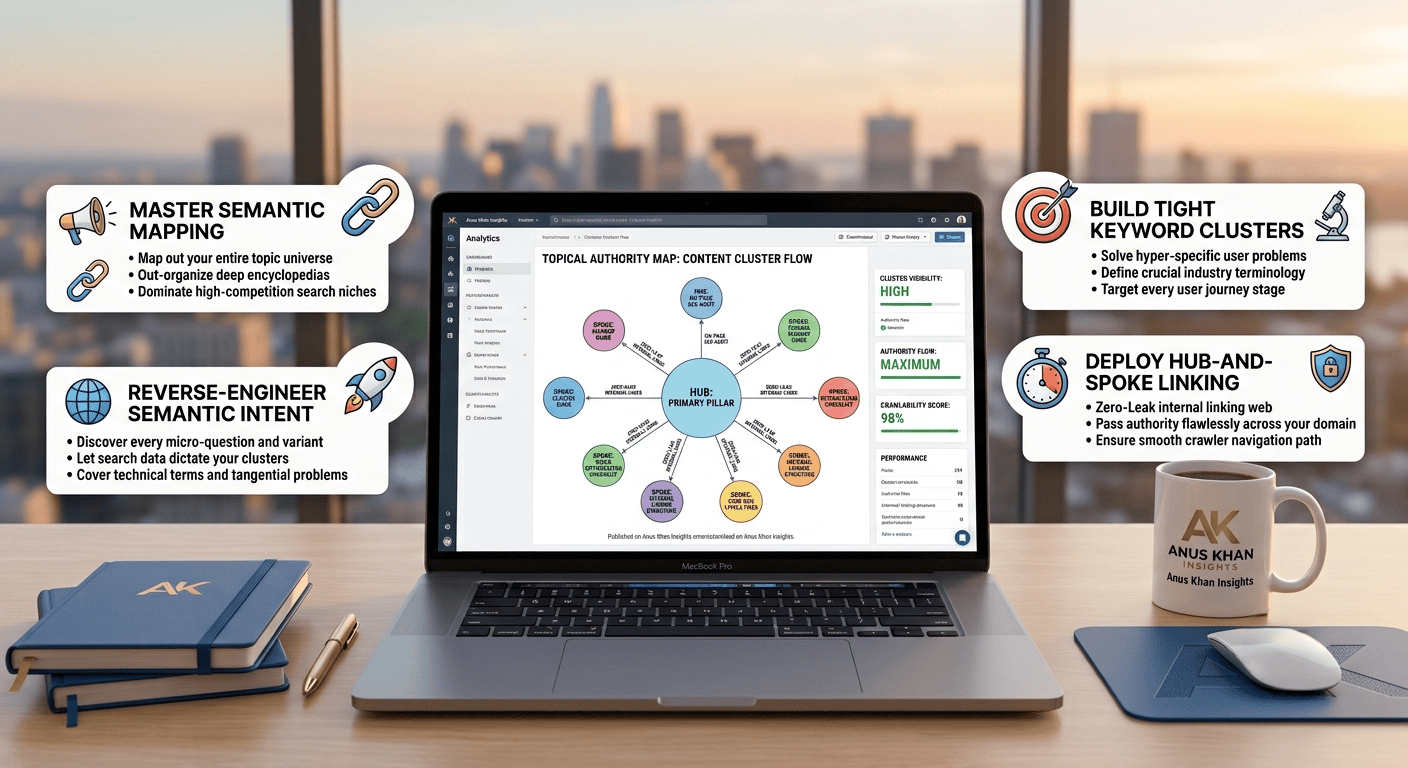
Semantic SEO to outrank high-authority competitors is the process of optimizing website content around topical concepts, entities, and search intent rather than isolated keywords.
Instead of writing shallow content focused on a single phrase, you create comprehensively structured articles that cover all related sub-concepts and user queries. This tells search engines that your domain provides complete topical coverage, allowing you to secure premium rankings ahead of older, larger websites.
2. Mapping Intent and Entities via NLP Analysis
To successfully execute semantic SEO to outrank high-authority competitors, you must look beyond basic keyword lists and analyze the vocabulary search algorithms expect to see.
The Strategy: Analyze the top three ranking competitor pages to discover the core entities (important terms, concepts, and relationships) they use.
The Action: Build an expanded vocabulary database for Anus Khan Insights. If you are writing a guide about “Website Flipping,” your text must naturally include essential semantic terms like valuation multiples, due diligence, P&L statements, asset acquisition, and domain authority to pass semantic checks.
3. Implementing Schema Markup for Enhanced Crawlability
Search engine crawlers rely heavily on structured data code to accurately understand the precise relationship between different elements on your blog.
The Strategy: Integrate advanced Schema Markup (such as Article, FAQ, and Organization schema) into your backend code.
The Action: This clean structural coding defines your content explicitly for search bots. By presenting your data in an easy-to-read format, you increase your chances of earning rich snippets, people-also-ask boxes, and premium placements on search result pages.
4. Answering Sub-Intent Questions Comprehensively
A major part of optimizing for semantic search is ensuring that your article eliminates the user’s need to click back and check another website.
The Strategy: Identify all secondary questions a user might have while reading your main guide.
The Action: Dedicate specific H2 and H3 subsections to answer these exact queries cleanly. On Anus Khan Insights, we structure these answers directly, using short sentences and clear lists to satisfy both voice search algorithms and high-velocity mobile readers perfectly.
Conclusion
Shifting your publishing strategy to semantic SEO to outrank high-authority competitors ensures your content remains highly visible despite search engine algorithm updates. By organizing your content around structured entities, adding rich schema data, and answering sub-intent questions thoroughly, you turn your niche blog into a powerful, high-ranking authority platform.


Leave a Reply