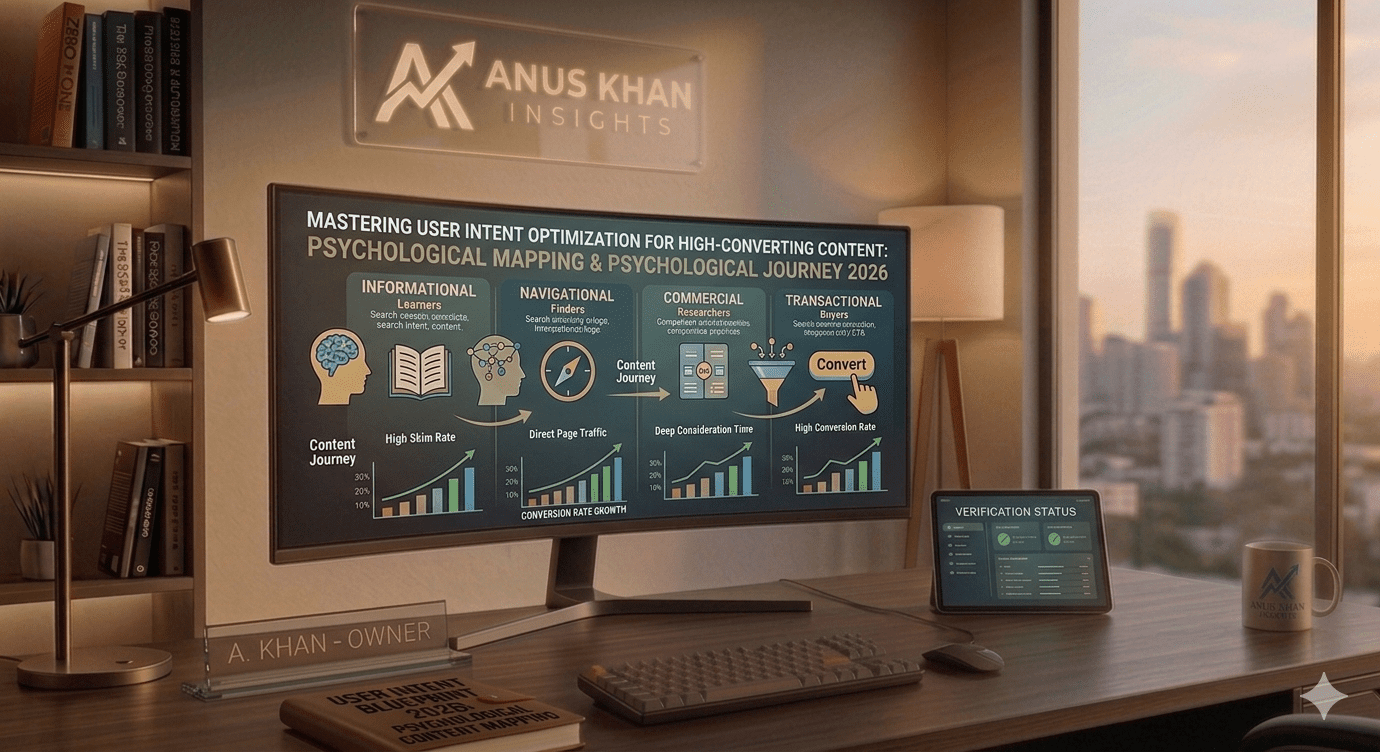
Writing content that ranks is only half the battle; writing content that converts is how you build a profitable digital empire. Modern search engines no longer just look for matching keywords; they analyze how effectively your website satisfies the exact psychological needs of the searcher. To turn organic visitors into buyers, you must align every piece of content with the reader’s precise expectations. At Anus Khan Insights, we focus on semantic depth. As a platform Owner, mastering this process is essential for long-term growth.
1. What is User Intent Optimization for High-Converting Content?
User intent optimization for high-converting content is the strategic process of identifying, analyzing, and precisely satisfying the underlying reason why a person types a specific query into a search engine.
Instead of guessing what your audience wants, you map your content structure to match their exact stage in the buyer’s journey. When your website provides the absolute best answer in the cleanest format, search engines reward you with top rankings, and readers reward you with conversions.
2. Deconstructing the Four Core Types of Search Intent
To implement user intent optimization for high-converting content, you must break down every keyword into its core categories:
Informational Intent: The user wants to learn something (e.g., “what is digital asset flipping”). Keep these guides educational, objective, and easy to skim.
Navigational Intent: The user is looking for a specific website or brand (e.g., “Anus Khan Insights login”). Ensure your brand assets and core landing pages are perfectly indexed.
Commercial Investigation: The user is researching options before buying (e.g., “best SEO tools for bloggers 2026”). This is where comparison grids, pros-and-cons lists, and deep reviews thrive.
Transactional Intent: The user is ready to purchase right now (e.g., “buy premium SEO audit template”). Ensure your checkout funnel is frictionless and your call-to-action (CTA) buttons are clear.
3. Optimizing Your Content Layout for Instant Satisfaction
Search engines track how users interact with your page. If a reader clicks on your site and immediately bounces back to the search results, it signals that your page did not satisfy their intent.
The Strategy: Eliminate massive introduction walls. Answer the user’s primary question within the first two paragraphs of your article.
The Action: Use clear bullet points, interactive tables, and bold headings so that readers tracking informational queries can find their specific answers within seconds.
4. Aligning Your Call-to-Action with the Reader’s Psychology
The ultimate goal of tracking intent is to drive conversions. Your monetization methods must match the reader’s current mindset.
The Strategy: Do not place aggressive transactional affiliate pop-ups on purely informational guides.
The Action: On an informational article, use your CTA to capture email addresses via a free lead magnet. Save your heavy transactional links for commercial investigation articles where the user is actively holding their credit card.
Conclusion
Perfecting your strategy for user intent optimization for high-converting content bridges the gap between raw organic traffic and scalable revenue. By analyzing search psychology and structuring Anus Khan Insights to deliver immediate, contextual value, you create a highly authoritative platform that turns passive readers into loyal clients.
Leave a Reply